
If you have ever seen a $500 product suddenly listed for $5, you probably had two thoughts at almost the same time: Is this real? and How fast can I check out?
Running PriceGlitch has taught me that the answer is rarely as simple as "someone typed the wrong number." That does happen, but modern retailers do not manage prices in one neat spreadsheet. A price can move through an inventory database, an ERP, a product feed, a marketplace, a promotional engine, a shopping cart, and several cache layers before it reaches the screen in front of you. When those systems stop agreeing, shoppers can see some truly strange numbers.
To better understand what is happening behind the product page, I asked retail operators, e-commerce consultants, and systems specialists to explain the failures they have seen firsthand. Their answers kept circling back to the same problem: most online price glitches are not one mistake. They are a chain of systems, rules, or teams failing to stay in sync.
What counts as an online price glitch?
A price glitch is an unintended price caused by incorrect data, faulty logic, or a breakdown between the systems that publish and process a retailer's prices. It is different from a normal promotion, clearance event, member price, rebate, or coupon that the retailer meant to offer.
Put more simply, the price is real on the screen, but the retailer did not mean to create it.
The difference is not always obvious. A real promotion usually has context around it: a sale banner, a landing page, a discount explanation, a start and end date, or the same price displayed consistently throughout checkout. A glitch often looks isolated. The product page may show one price while the cart, app, advertisement, or order review shows another.
Warren Davies, founder of BeyondCRM, has spent 30 years working with business data systems. He described the problem as a data integrity failure.
"The root cause is almost never malicious; it's usually disconnected systems where one platform updates pricing and another doesn't receive the change cleanly."
Davies calls the clearest warning sign "context collapse." If a current product is suddenly 90% off but there is no promotion, no special landing page, and no explanation from the retailer, the price may have lost its connection to the information that was supposed to control it.
How bad data becomes a live price
One of the most common failure points is a bulk product update. Retailers regularly import thousands of prices, product variants, costs, and inventory quantities through CSV files or automated data feeds. A column mapped to the wrong field can spread a mistake across an entire catalog before anyone sees it.
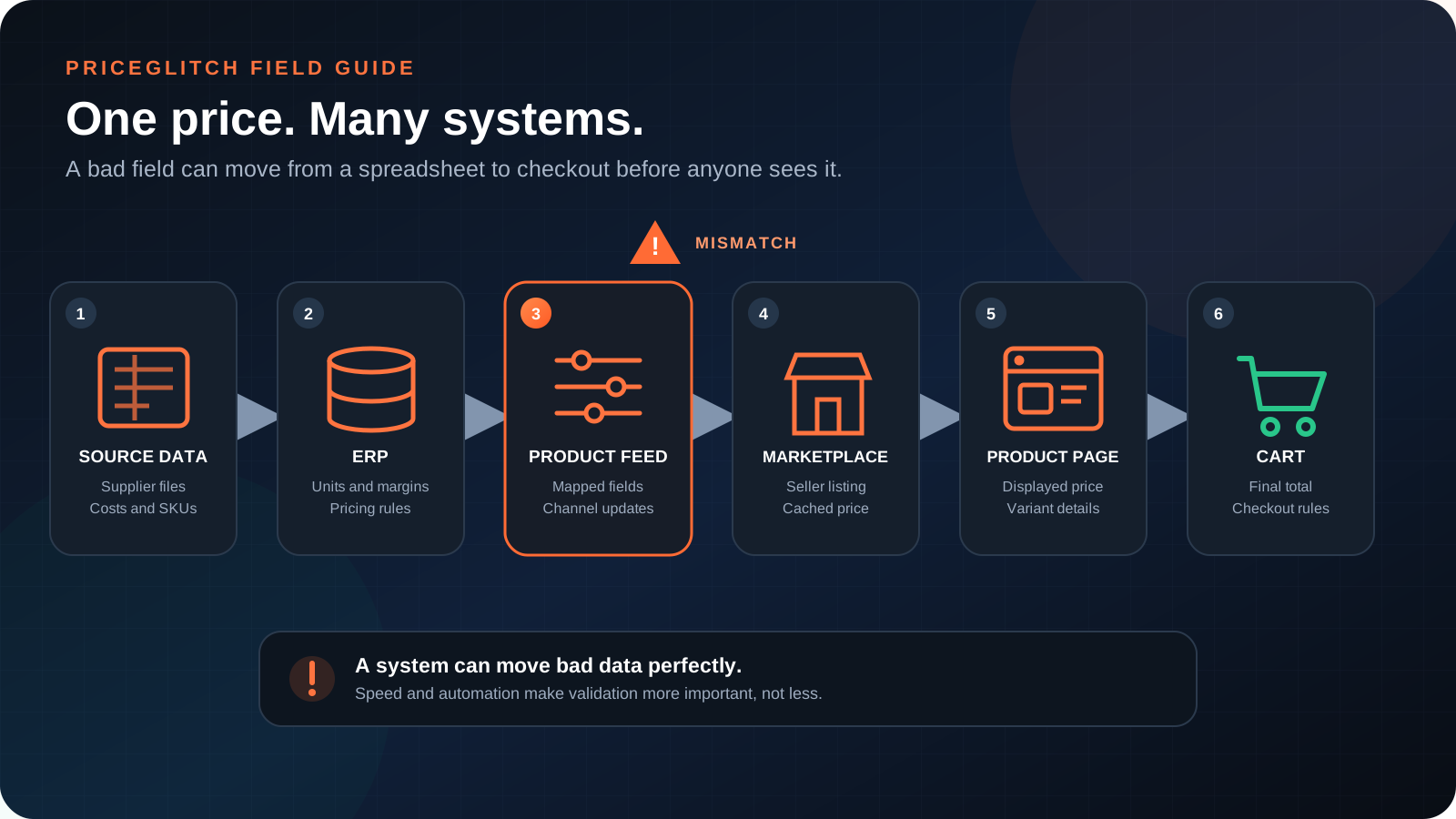
Carlos Cortez, co-founder and senior consultant at S9 Consulting, has built systems that calculate margins and distribute prices to online marketplaces. He said the largest errors often come from automation rather than a person manually changing one listing.
"Price glitches frequently stem from logic errors within automated repricing algorithms or flat-file database imports rather than simple human entry."
His example is easy to picture. If a cost sheet lists a $500 amplifier as $5 because of a misplaced decimal, an automated pricing engine may accept that number, calculate a selling price from it, and push the result to a marketplace. The system moves quickly because speed is exactly what it was designed for. Unfortunately, it can move bad data just as efficiently as good data.
Eryk Piatkowski, owner of K&B Direct, sees another version of the same problem in home improvement retail. Cabinets, windows, doors, and their accessories can have closely related product records but very different prices.
"A common operational mistake happens during bulk inventory uploads when accessory price sheets get mapped to main product units."
That can result in a cabinet displaying the price of a hinge or knob. To a shopper, it looks like an unbelievable markdown. To the retailer, it is a product relationship that was mapped incorrectly during an upload.
Sometimes every system has a different answer
Pricing gets more complicated when a store has separate systems for retail prices, customer-specific discounts, promotions, subscriptions, product quantities, shipping, and third-party marketplaces.
Lori Appleman, founder of Redline Minds, has worked with online stores for nearly 25 years. She sees especially complicated pricing in business-to-business and hybrid stores.
"The glitches I see most often come from systems disagreeing: ERP pricing, ecommerce pricing, customer-specific price books, scheduled promos, and unit-of-measure rules."
A case of products might accidentally display the price of one individual item, or an individual product might inherit a case price. The number can look like a huge discount even though the real problem is a missing unit, quantity, or packaging rule.
The product did not suddenly become cheaper. The website temporarily lost track of what it was pricing.
This is why words such as case, pack, subscription, member price, and rebate matter. Before assuming a low number is a glitch, check what the price actually includes and whether another condition explains it.
Promotion rules can collide with each other
Not every glitch begins with a bad product file. Some happen after the correct price reaches the website.
Jeffery Loquist, vice president of SiteTuners, has more than 18 years of e-commerce experience, including a decade as director of marketing for BBQGuys.com. He pointed to shopping-cart logic that unintentionally allows several discounts to stack on an item that is already marked down.
"Another common operational culprit is flawed shopping cart logic, where backend rules accidentally allow multiple promotional discount codes to stack on top of already markdown clearance items."
For example, a clearance price, a sitewide promotion, and a coupon may each work correctly on their own. The problem begins when the checkout system applies all three even though the retailer intended them to be mutually exclusive.
Josh Qian, COO and co-founder of LINQ Kitchen, said compound discounts become especially risky when a store has not configured a minimum floor price. A sequence of valid promotional rules can then produce a final number that was never reviewed or intended.
"Furthermore, site algorithms apply unintended compound discounts on checkout when stacking promotional rules without setting absolute floor price limits."
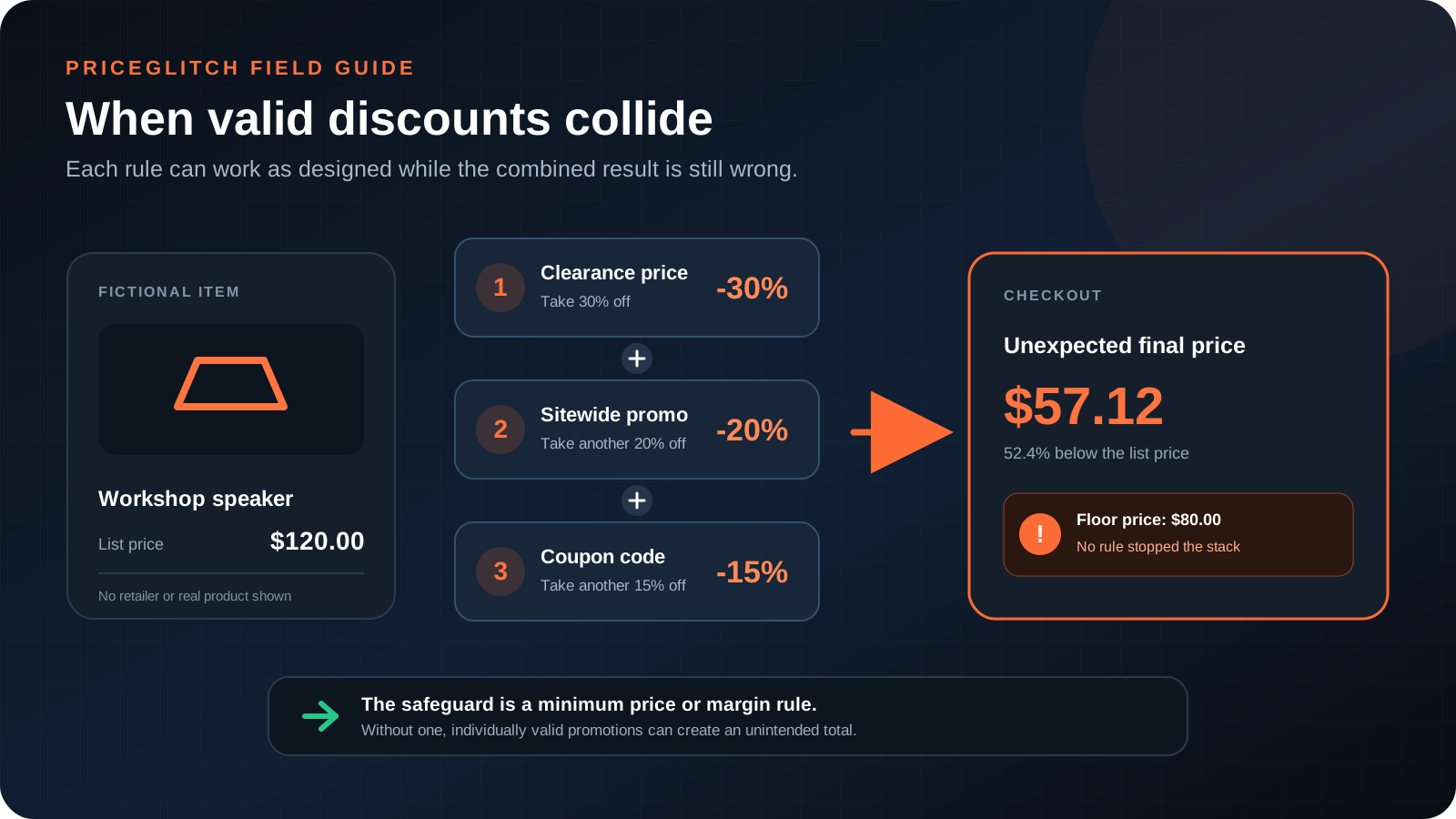
That creates one of the more confusing situations for shoppers: the product page may look normal, but the unexpected price appears only after adding the item to the cart. The reverse can happen too. A strange product-page price may disappear as soon as the checkout system refreshes the product data.
Human communication still causes digital mistakes
Retail systems get blamed for almost everything, but software is not always the starting point.
Before founding Dietz Group, Rob Dietz served as vice president of operations and marketing for a regional sports retail chain. He saw pricing become harder to control as the company managed hundreds of products across physical stores and online platforms.
"The most underappreciated cause of price glitches I witnessed was a breakdown in communication between the marketing team and the web team."
A promotional price can be approved correctly but scheduled incorrectly. A decimal can be lost when instructions pass between teams. One department may extend a sale while another system still expects it to end. By the time the error reaches the public site, each person involved may have completed their own part of the process correctly.
That is an important point: a glitch does not always mean the retailer has a broken website. Sometimes the site is faithfully displaying a bad instruction.
Why deal communities find glitches so quickly
A retailer may take time to notice an isolated pricing error. Deal communities do not.
When an unusual price appears on r/PriceGlitch, people immediately start comparing the listing, testing checkout, and leaving comments about what they find. Upvotes can bring more attention, while comments can reveal that the percentage is wrong, the item is a different variant, or the order is being canceled.
That community response is useful, but it is not proof that a retailer will honor the order. Social validation tells you that other people see the same listing. It does not tell you what the retailer's inventory, payment, or fulfillment systems will do next.
Dietz explained that urgency and social proof help a glitch spread before a retailer can react. Qian also noted that automated deal-monitoring tools can detect large price drops and alert communities quickly. Once many people begin placing orders, the sudden traffic or unusual sales volume can bring the error to the retailer's attention even faster.
What happens after a glitch order is placed?
Checkout is not the end of the retailer's process. An order may still pass through payment review, inventory confirmation, margin checks, warehouse software, shipping calculations, and fraud controls.
There is a frustrating truth here for shoppers: none of those internal checks are visible from the product page.
Cortez said modern back-end systems can compare the transaction value with the retailer's cost of goods and flag an order when the economics do not make sense. Piatkowski sees another checkpoint with large home products: a cabinet or door that appears unusually cheap may still require specialized freight, and the mismatch can trigger a manual review before it leaves the warehouse.
Appleman said retailers generally investigate the cause, stop the incorrect price, and then decide whether to cancel the order, honor it, or offer an alternative. That decision can depend on the retailer's terms, the size of the error, the order status, applicable law, and the practical cost of fulfilling the orders.
This is where shoppers should be careful with absolute claims. An order confirmation does not universally guarantee that a mistaken price must be honored. Retail policies and consumer laws vary, and many retailers reserve the right to cancel obvious pricing errors before fulfillment. A shipment notification is a stronger sign that the order is moving, but no general article can promise the outcome of a specific transaction.
How to check a suspiciously low price
You do not need access to a retailer's internal systems to spot inconsistencies. Before placing an order, take a minute to check the full path from product page to checkout.
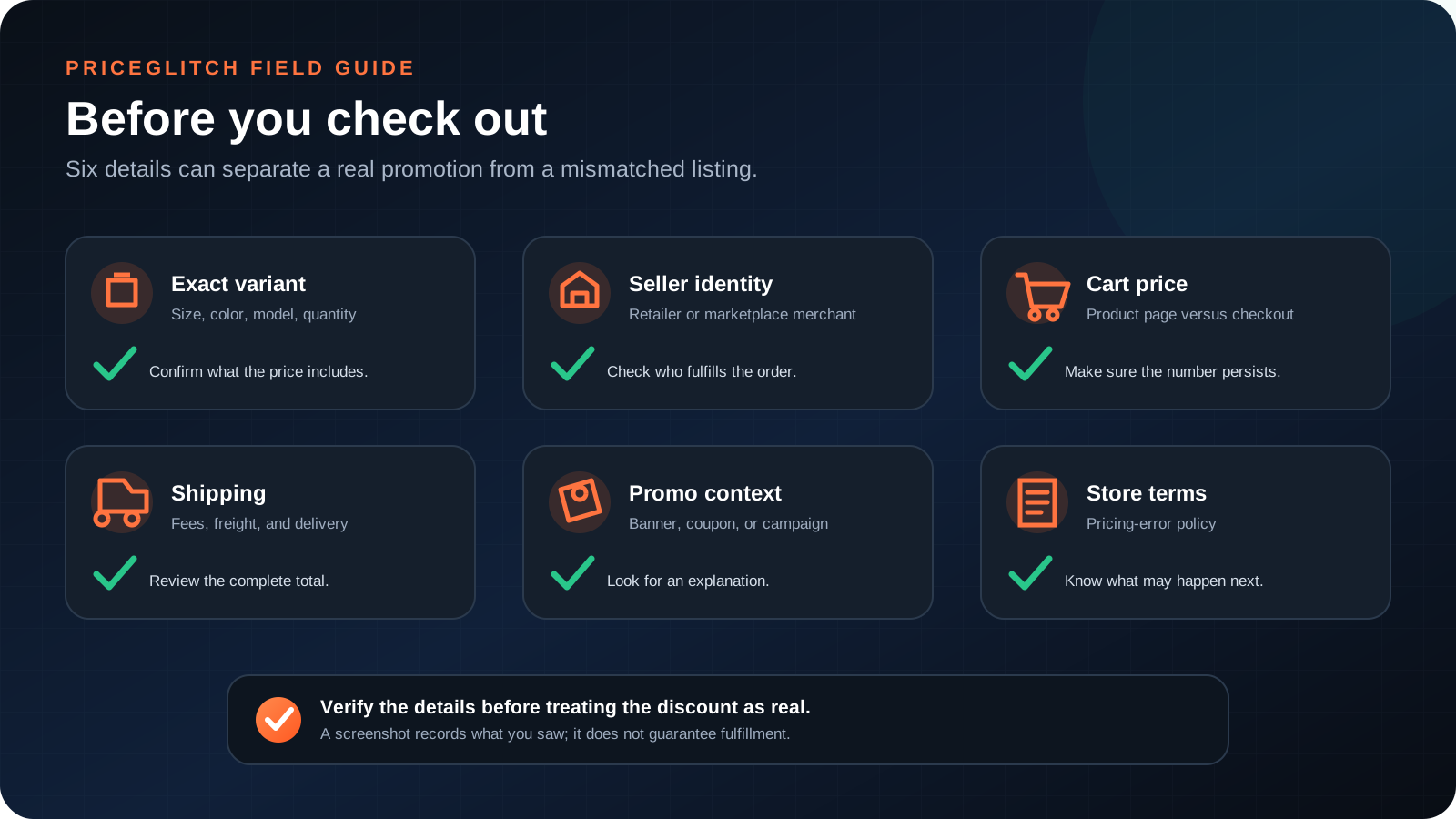
- Compare the product page and cart. If the discount appears in only one place, a pricing or promotional rule may not be working as intended.
- Confirm the exact variant. Check size, color, quantity, model number, condition, and whether the price is for one item or a case.
- Look for promotional context. Legitimate sales usually have a banner, coupon explanation, member requirement, rebate, or campaign page.
- Check the seller and fulfillment details. A familiar retailer's marketplace may still contain listings from an unrelated third-party seller.
- Review shipping costs. A low product price can be offset by unusual freight charges or can trigger a review when the shipping method does not match the product.
- Read the retailer's pricing-error terms. Know what the store says it may do if a listed price is incorrect.
- Do not ignore checkout friction. Loquist warns that a site hiding seller information, fees, or basic transactional details may be using a fake discount to collect personal data rather than displaying a genuine retail error.
A screenshot can preserve what you saw for your own records, but it does not force a retailer to fulfill the order. The practical approach is to treat a dramatic price as an opportunity that may work, not money you have already saved.
What retailers can do to prevent price glitches
The experts' examples also point to a useful prevention checklist for retailers:
- Define which system is the authoritative source for each price.
- Validate bulk imports before publishing them to the live catalog.
- Set minimum margin or floor-price alerts for automated repricing.
- Test combinations of coupons, clearance prices, and scheduled promotions.
- Make units, cases, packs, and product variants explicit in the data.
- Require marketing and web teams to confirm promotion timing in one shared record.
- Monitor sudden changes in order volume, transaction value, and negative-margin sales.
No safeguard will catch every mistake, especially when a retailer is managing a large catalog across several marketplaces. The goal is to stop one incorrect field from moving through every connected system without a challenge.
The bottom line
Most online price glitches are not mysterious. They usually begin with bad data, conflicting rules, or two systems that disagree about which price is correct. What makes them feel dramatic is the speed: automation can publish the mistake instantly, and deal communities can spread it just as fast.
For shoppers, the practical mindset is simple: be interested, but do not count the savings before the order is fulfilled. Check the variant, seller, cart, shipping, promotion details, and retailer terms. If everything still points to an unusually low price, you can decide whether it is worth trying, but the order is not guaranteed.
At PriceGlitch, our role is to surface unusual deals and give the community a place to compare what is happening in real time. We direct readers to the live retailer listing because prices, inventory, and order status can change quickly. The deal may be real, it may be a promotion with poor labeling, or it may be a short-lived system failure. The final check should always happen at the retailer.
If you want to follow what the community is finding, visit r/PriceGlitch or subscribe to the PriceGlitch newsletter.
Reporting note: Expert responses were provided to PriceGlitch in writing through Source of Sources. Titles and company affiliations reflect the information supplied by each contributor. Responses were condensed and placed in context for clarity.